

7 tips for planning Easy Read documents
- Clare Tarling

- Jan 16
- 3 min read
My typical Easy Read project looks like this:
An organisation sends me 20-pages of small print, to be translated into Easy Read. It might be a topic I am familiar with, such as social care or personal budgets. It might be something I am less familiar with: a specific medical condition, an academic paper or a legal framework.
I like to work fast, and many organisations work under huge pressure, so there is usually a tight deadline.
I am expected to return an extremely condensed, large-print, error-free document. This often means reducing 20,000+ words to around 1200.
At this stage it is easy to feel the fear! Total overwhelm! Where do I even start?
I want to share my method with you. I have arrived at this routine after more than 20 years of making Easy Read information for people with learning disabilities. I hope that following these steps will help you to read and truly understand complex and unfamiliar information, without stress or worry.
Be kind to yourself! Work with your brain, not against it. Pick a time of day when you are naturally alert and ready. We are all different, but I love early mornings – it is when I work best. My brain also thanks me when I eat nutritious food and get heaps of exercise. I also don’t attempt difficult work after about 3pm.
Plan blocks of focused work time for each stage of the process below, and stick to them. I work in 50-minute blocks. After each one I move, drink water, take a few deep breaths and start again on the next “block” with a very clear intention about what I will achieve in that time.
Read the document through once, without stopping. Don’t attempt to understand it. Just cast your eyes over every word, but don’t put any pressure on yourself to do any more than this.
Think for at least 15 minutes: who is this document for? What do they want or need to know? What might they be worried about? What action does the organisation want them to take? Make notes about all this, and keep the notes next to you for the rest of the project. Refer to them at every stage, especially at the end.
Take a long break! Switch to a different project or go for a walk. Just let it all sink in.
Read the document through again, in much more detail this time, and highlight all the key points. You may have to re-read it a few times, and research any topics and jargon that you do not understand. You are aiming for a full understanding of your source material.
Next, I like to draw. I might sketch out storyboards or a mind-map. If I am feeling tired and unmotivated I will dig out my coloured felt-tips and just play with ideas on a huge bit of paper. Find a method you enjoy. The best method is the one which is the most fun!


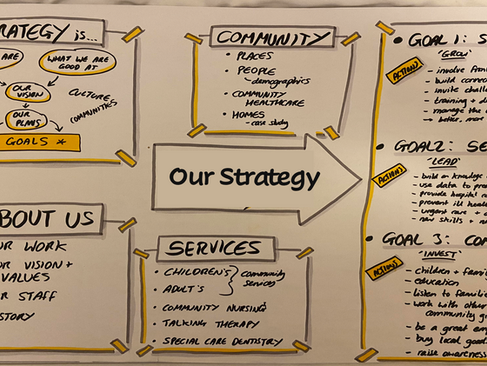
From these sketches, I start to write the Easy Read document. I often use a blank page-template, but I rarely start by editing the original document. Such radical summarising usually requires a fresh start and some restructuring.
Note: no AI! My process promotes a deep understanding of the original document, and a great deal of thought about the reader, before I begin to write an Easy Read version. Using an AI application bypasses this requirement for true understanding, leaving you totally unaware of how accurate your end product is. I spend more than half my time preparing to write, not actually writing. So yes, I could save a lot of time using AI to summarise long documents, but I would have no confidence in the quality of my final version.
I hope this is helpful to you. Do comment or contact me if you have developed your own ways to read, learn and summarise – I am always keen to learn from new ideas!
----------------------------
I design documents for people with learning disabilities, in Easy Read and plain English.
I work for universities, NHS, local government, arts organisations, museums and more! I can produce PDF or .html documents for online viewing, or create professionally printed leaflets or booklets.
If your organisation needs to communicate effectively with people with learning disabilities, get in touch with me for a quote!


What an insightful guide! The process of condensing complex information into something accessible and clear is such a vital skill. It reminds me of the discipline required in my own work; while I focus on the details of growing my knee massager brand, I’ve found that staying physically comfortable is essential to maintaining the mental clarity needed for such detailed tasks. Taking the time to care for my body—ensuring I have healthy knees through regular use of a massager—definitely helps me stay focused on the end goal without feeling overwhelmed. Thanks for sharing these expert tips, they’re incredibly useful!
Clare, this is such a brilliant and practical breakdown of your process. The way you described moving from "feeling the fear" of a 20-page document to a methodical, step-by-step approach (printing it out, reading for narrative, then chopping it up) is a fantastic lesson in project management for any field. It reminds me of how overwhelming it can be to get into the world of high‑performance RC cars with all the technical specs, but having a clear, simplified guide makes all the difference. For anyone curious about a fun and exciting entry point, I can highly recommend the mjx rc series, especially the mjx hyper go lineup, which offers incredible ready‑to‑run performance and durability. You can see the full range…